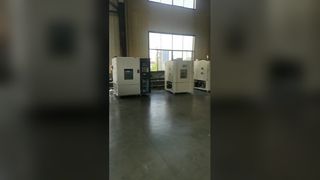
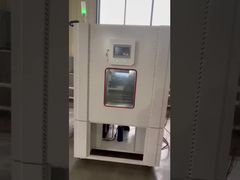
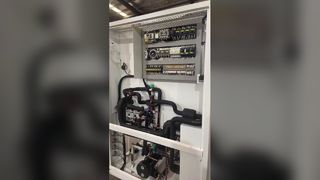
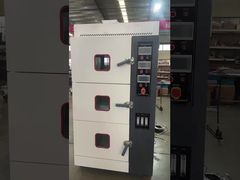
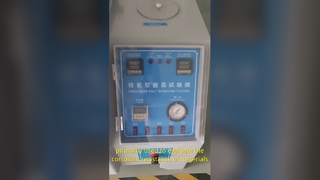
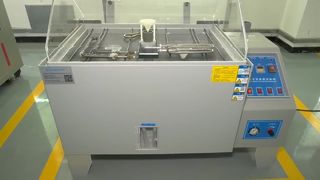
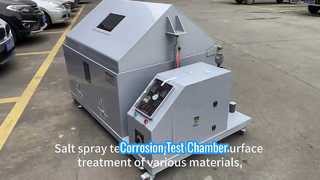
Brief: Follow the narrative to see how small design choices affect everyday performance. In this video, we demonstrate the Salt Fog Test Chamber in action, showing you how it simulates corrosive environments to evaluate material corrosion resistance according to ASTM B117 standards. You'll learn about its operational setup, safety features, and how it helps manufacturers ensure product reliability through precise testing from 48 to 1000 hours.
Related Product Features:
Simulates corrosive environments to evaluate material corrosion resistance accurately.
Wide test temperature range from 35°C to 55°C for versatile testing conditions.
Complies with ASTM B117 standard for reliable and standardized test results.
Features multiple safety protections including overload, overheating, and leakage protection.
Constructed from durable SUS304 chamber material for long-lasting performance.
Offers adjustable spray distance from 30cm to 50cm for precise test control.
Available in various test areas from 0.09m² to 2.25m² to suit different sample sizes.
Equipped with PLC/PC control system for accurate and user-friendly operation.
FAQ:
What is the primary purpose of the Salt Spray Test Chamber?
The Salt Spray Test Chamber is designed to simulate corrosive environments to evaluate the corrosion resistance of industrial materials and protective coatings, helping manufacturers ensure product quality and reliability.
Which testing standards does this chamber comply with?
This chamber is designed to test in accordance with the ASTM B117 standard, ensuring reliable and standardized corrosion resistance evaluations.
What safety features are included in the Salt Spray Test Chamber?
The chamber includes multiple safety protections such as overload protection, overheating protection, and leakage protection to ensure operational safety and testing reliability.
What is the available test area range for this chamber?
The Salt Spray Test Chamber is available in various sizes with test areas ranging from 0.09m² to 2.25m² to accommodate different sample sizes and testing requirements.